
Asian Rice Cakes are a chewy and delicious ingredient used in stir-fries and desserts, especially Korean, Japanese and Chinese cuisine. Check out my Essential Guide on all things rice cakes: how to find and cook different types of rice cakes!
What are rice cakes?
We are talking about Asian rice cakes specifically that are different than Western rice cakes (round and crunchy ones). Asian rice cakes are made by soaking rice and then the rice is ground into wet rice flour. Finally, the rice cakes are steamed and formed in tubular or sliced shapes. Depending on the type of rice cake recipe you are making (can be rice cake soup or Rose Tteukbokki), the rice cake flavor can be made very mild or slightly sweetened.
Chinese Rice Cakes
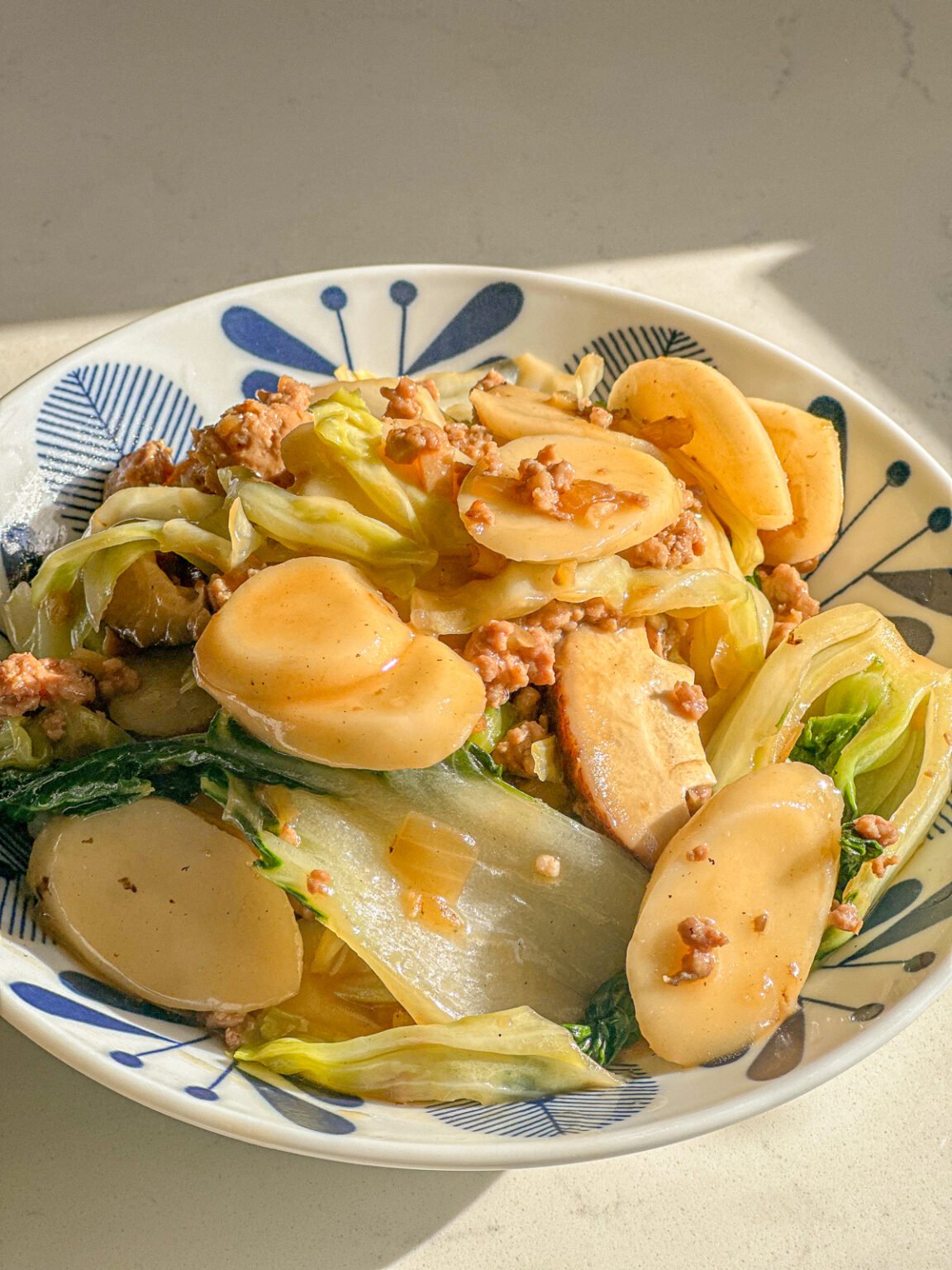
In Chinese cooking, we call rice cakes, nián gāo (年糕). They are chewy and more dense. The flavor can be made slightly sweet or savory when stir-fried like my Shanghai Rice Cakes. Nian Gao is usually eaten during Chinese New Year (also known as Lunar New Year) to symbolize growth and prosperity.

Korean Rice Cakes
In Korean cooking, rice cakes are called tteok (떡) which comes in many shapes and sizes like tubular and sliced. Rice cakes are a staple in Korean cooking, which can be served at birthdays, weddings, holidays, lunar new year, or everyday comfort foods like rice cake soup and the popular street food, Spicy Ttekkbokki. Since there are many Korean dishes you can make with tteok, the rice cakes will vary in taste and textures (chewy, soft, light or airy).
Japanese Rice Cakes
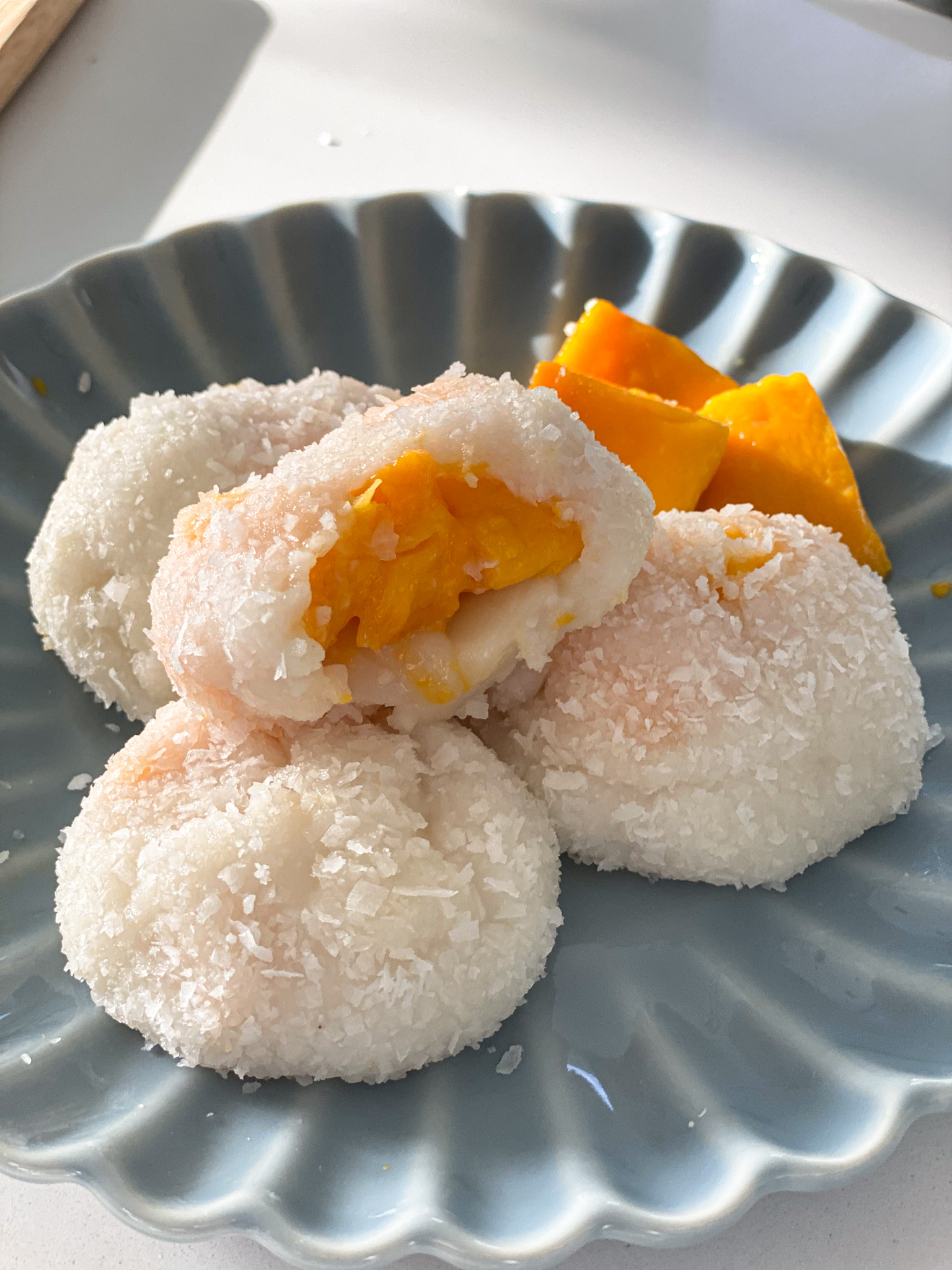
Japanese rice cakes are called mochi and the most popular among Western people. The soft and chewy texture is usually sweet and filled with red bean paste, fruit, or ice cream. Mochi is usually made from sweet rice flour. My favorite type of mochi is when fruit is in the center so you can have a soft and chewy texture like this Mango Mochi.
Different Types of Asian Rice Cakes (tubular vs. sliced)
If you had rice cakes before, you may have seen the most popular types…tubular and sliced. You can find tubular and sliced rice cakes at asian grocery stores like H-Mart or Zion market in the frozen section. If you’re interested in a good shopping grocery list, check out my Top Favorite Items at H-Mart.
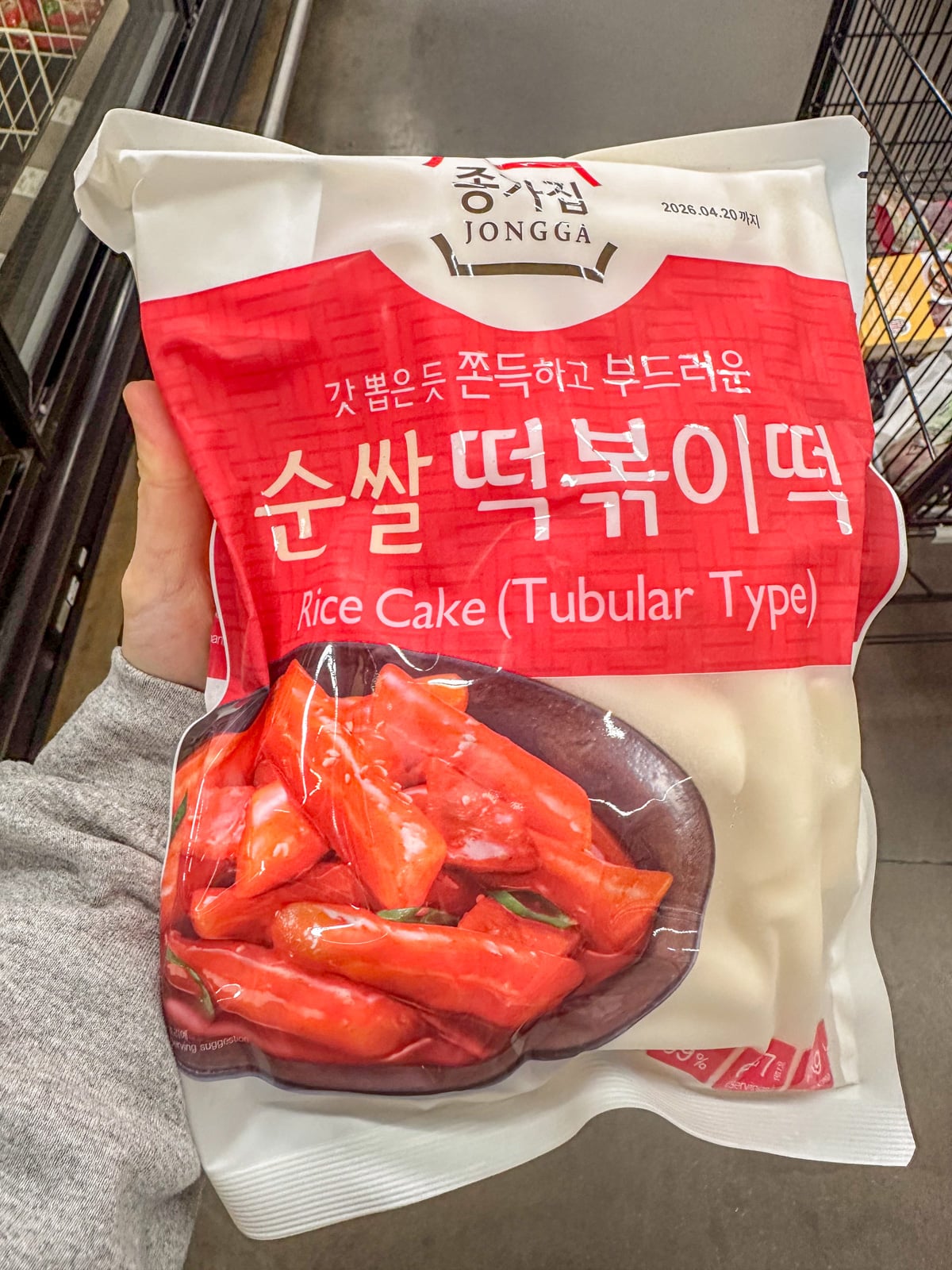
Tubular rice cakes are long and cylinder-shaped, most commonly seen in Korean cooking. They are chewy, firm and great at soaking up sauce, which makes them perfect for dishes like Ramen Tteokbokki. They can be sold fresh, refrigerated, or dried.
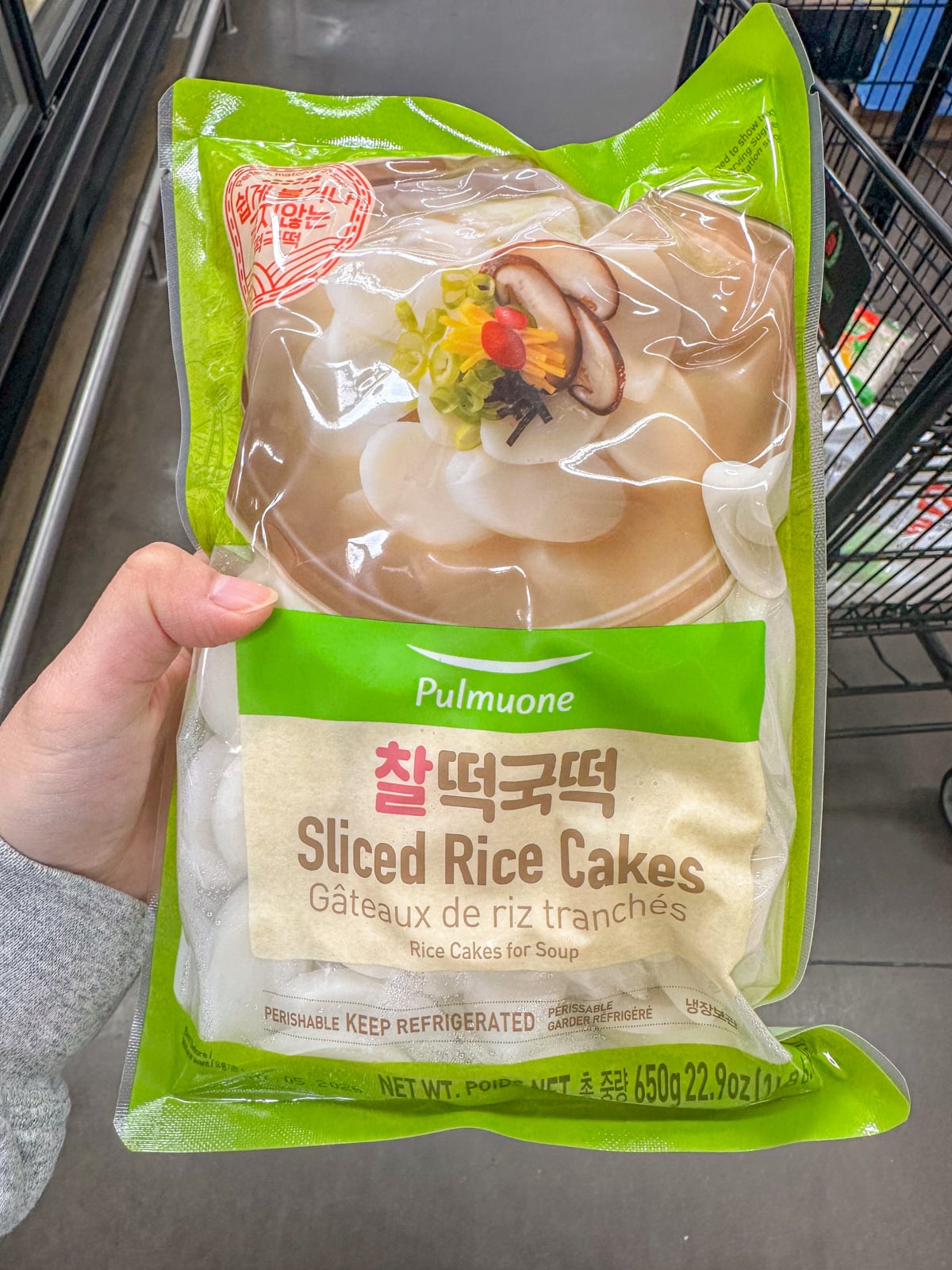
Sliced rice cakes are flat, oval-shaped pieces that are popular in Chinese dishes. They cook quickly and have a soft yet chewy texture, making them ideal for soups, hot pot, or pan-fried dishes. Because they are thinner, they absorb flavors fast and don’t usually need long cooking time. Add these oval shaped rice cakes in Hot Pot At Home or Korean Ox Bone Soup.
How to Cook Rice Cakes
Frozen rice cakes need to be soaked before cooking. I recommend soaking and washing the frozen and dry rice cakes (tteok) before cooking so it’s not too hard or chewy when cooked. Soaking helps rice cakes cook evenly and prevents them from staying hard in the center. Soaking 30 minutes beforehand also improves the rice cake texture, making them chewy instead of tough.
Fresh rice cakes can be cooked right away as they are fresh and soft. Something to keep in mind is that fresh rice cakes will dry up the next day, so make sure to eat within the same day. If you don’t finish the fresh rice cakes, you can always freeze them in an airtight bag and eat within a few months. I recommend soaking the rice cakes if you froze them.
What recipes can I make with rice cakes?
Rice cakes are very versatile and can be used in many different dishes. You can stir-fry them with vegetables and protein, like in my Dak Galbi (Stir Fry Spicy Chicken), simmer them in spicy or savory sauces such as Tteokbokki with Ramen (Rabokki) or Rose Tteokbokki (with Mala Sauce), or add them to Korean Army Stew (Budae Jjigae) or soups for a chewy texture.
Asian Rice Cakes FAQ
You can buy Korean rice cakes at almost all Asian grocery stores in the frozen aisle. I find Korean brands (pictured in the blog post above) reliably tasty and easy to find.
Korean rice cakes (tteok) are made mainly from short-grain rice or glutinous rice, soaked, ground into a paste or flour, then steamed. The cooked rice is pounded or kneaded to create their signature chewy texture.
Fresh rice cakes are softer, more tender, and subtly sweet but spoil quickly and must be used within a day or two. Frozen rice cakes are flash-frozen to preserve texture, last much longer, and need soaking or gentle simmering to regain chewiness, sometimes with slightly less elasticity than fresh.
Fresh rice cakes need to be eaten within a day or two (maximum) because they tend to dry out quickly. Store them in room temperature in a airtight container. If you don’t finish them, put the asian rice cakes in a tight Ziplock bag and freeze for a maximum of 2 months for optimal texture and taste.

Leave a Reply